 by Ben Wilson
Investment property remains one of Australia’s most popular wealth-building strategies. Strong historic growth, favourable tax treatment and the tangible nature of real estate continue to attract investors.
Yet too often, purchases are driven by emotion, market sentiment or the perceived benefits of negative gearing — without a rigorous assessment of the specific property they are looking to purchase.
The difference between a high-performing investment and a long-term financial burden usually comes down to disciplined analysis.
Understanding the True Holding Costs
Rental income is only part of the story. Investors must carefully assess the full cost of holding a property, including:
- Interest and loan repayments
- Council rates and water charges
- Insurance
- Property management fees
- Maintenance and repairs
- Strata fees
- Land tax
In today’s interest rate environment, debt servicing is often the largest expense. A one or two percent increase in rates can materially alter cash flow. Investors should model best, base and worst-case scenarios to ensure the property remains affordable under changing conditions.
If ongoing contributions are required, the key question is whether those cash outflows are sustainable over multiple years.
Negative Gearing: Support Mechanism, Not Strategy
Negative gearing can reduce taxable income where property expenses exceed rental income. However, it does not eliminate losses — it merely reduces them.
For example, a $10,000 annual loss at a 37% marginal tax rate still results in a $6,300 after-tax cost. The tax benefit should support a sound investment thesis, not justify an otherwise weak asset.
The property must be fundamentally strong in terms of location, demand, and long-term growth prospects — regardless of tax treatment.
Comparative Investment Assessment
Property is capital intensive and relatively illiquid. Stamp duty, acquisition costs and selling expenses make mistakes costly to unwind.
Before committing significant equity to a specific property, investors should assess:
- Net rental yield
- Projected cash flow
- Long-term capital growth assumptions
- Risk profile
- Alternative uses of capital or equity
Understanding opportunity cost is critical. Capital allocated to one property cannot be easily redeployed without frictional costs. A disciplined comparative analysis helps ensure the selected asset is the most appropriate deployment of funds.
The Importance of Independent Analysis
Comprehensive due diligence extends beyond reviewing a sales listing or historic yield. It requires detailed financial modelling, tax impact analysis, scenario testing and an objective assessment of risk.
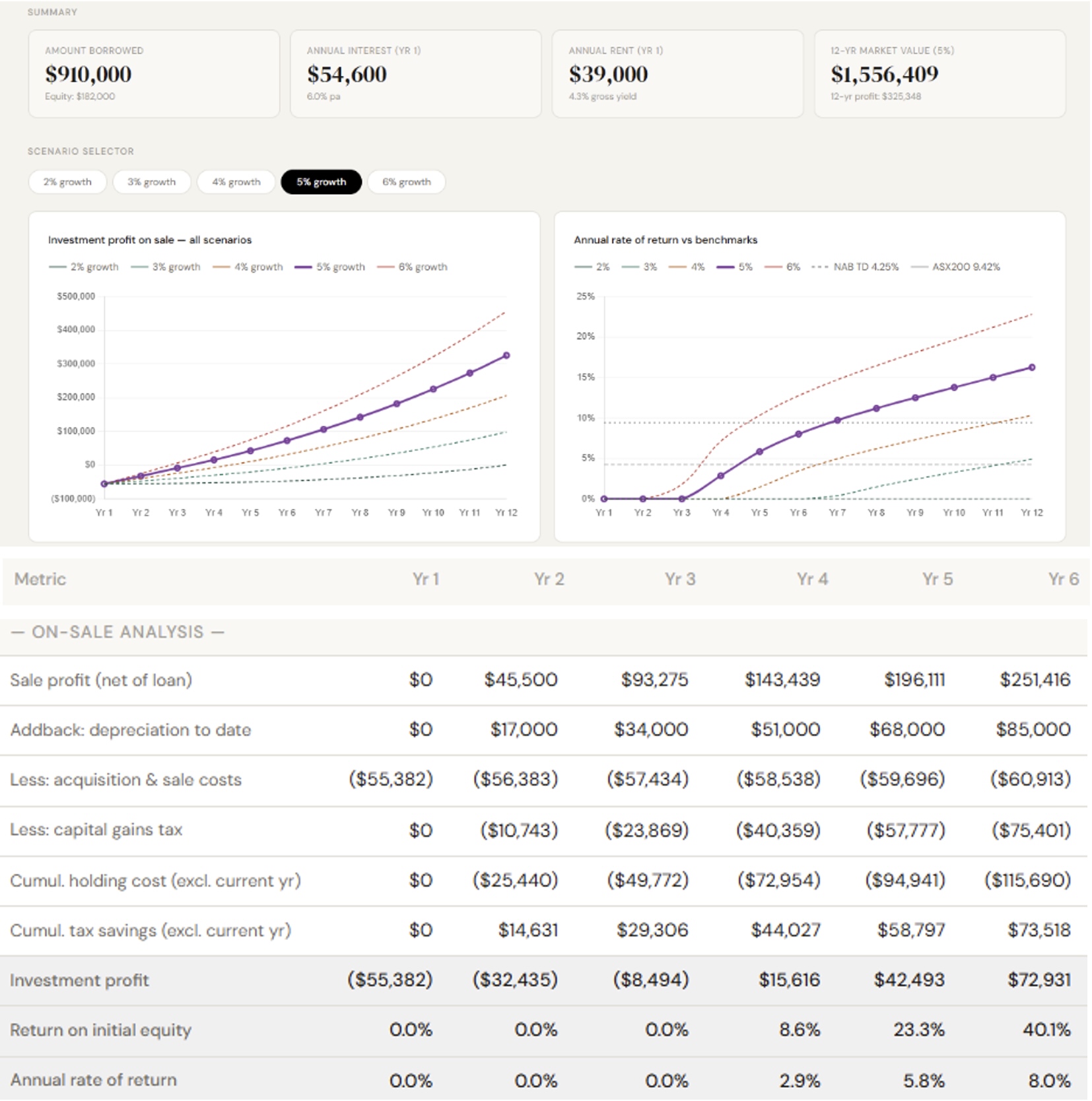
Before committing to an investment property, investors should seek structured, independent advice. For a fixed fee, Lambourne Partners can provide an analysis of a prospective investment property, looking at Negative Gearing & Tax, Cashflow on Holding Costs, Potential Growth Scenarios, and Exit Profits. See the below sample of our analysis reporting and reach out below to arrange a meeting with Ben Wilson to discuss your specific opportunities.
Example analysis: